
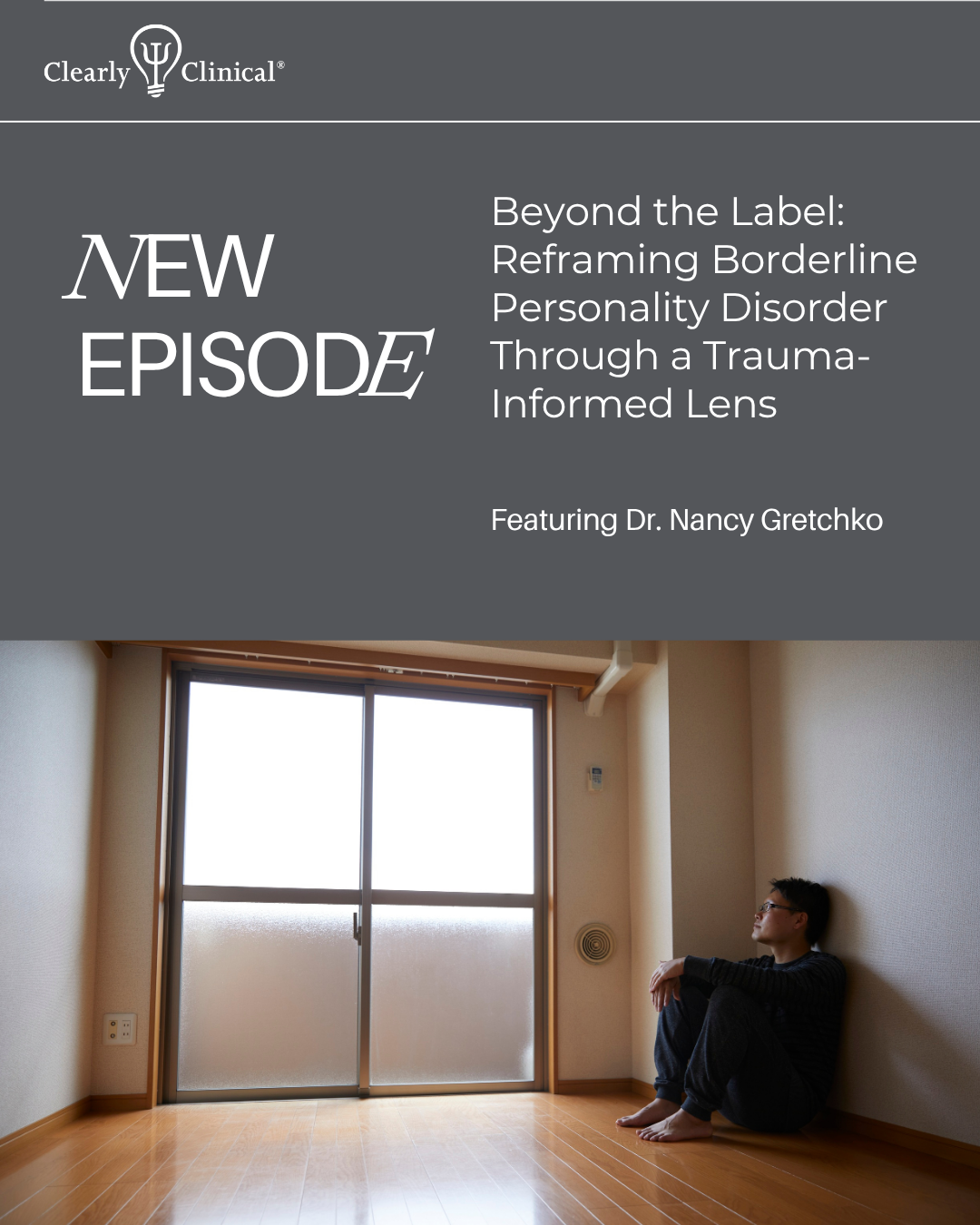
Beyond the Label: Rethinking Borderline Personality Disorder Through a Trauma-Informed Lens
/Beyond the Label: Rethinking Borderline Personality Disorder Through a Trauma-Informed Lens
Borderline Personality Disorder (BPD) remains one of the most stigmatized and misunderstood diagnoses in mental health care. For many clinicians, the label itself can evoke assumptions about intensity, instability, or difficulty in treatment. But what if those assumptions are limiting our ability to accurately assess and effectively support our clients?
In this presentation-style podcast CE course, Dr. Nancy Grechko, Licensed Clinical Psychologist, invites mental health professionals to reconsider BPD through a trauma-informed lens. Rather than focusing solely on observable behaviors, this episode explores how emotion dysregulation, chronic invalidation, and complex trauma shape the internal and external experiences of individuals living with BPD.
Moving Beyond the Stereotype
Traditional understandings of BPD often emphasize externalized symptoms such as impulsivity, interpersonal conflict, and emotional reactivity. While these presentations are valid, they are not the full picture. Many individuals experience BPD in more internalized ways, including chronic emptiness, self-criticism, shame, and intense fear of rejection. These presentations are frequently overlooked in clinical settings, leading to misdiagnosis or underdiagnosis.
This course highlights the importance of broadening our clinical lens to include these quieter, less visible manifestations. By doing so, clinicians can better recognize BPD across diverse client populations, including those who may appear high-functioning or outwardly stable.
The Role of Trauma and Invalidation
A central theme of this episode is the role of trauma, particularly complex and developmental trauma, in shaping the features commonly associated with BPD. Dr. Grechko explores how chronic invalidation within caregiving environments can disrupt emotional development, self-concept, and interpersonal functioning.
When viewed through this lens, many behaviors associated with BPD begin to make sense as adaptive responses rather than character flaws. Emotional reactivity, impulsivity, and even self-harm can be understood as attempts to regulate overwhelming internal states in the absence of effective coping skills.
This shift in perspective moves clinicians away from blame-based interpretations and toward a more compassionate, clinically grounded understanding.
Rethinking Diagnosis and Language
The episode also challenges clinicians to reflect on the impact of diagnostic language. Labels like “borderline personality disorder” can carry significant stigma, influencing both clinician attitudes and client self-perception. Dr. Grechko introduces alternative ways of conceptualizing these patterns, such as viewing BPD as a disorder of chronic emotion dysregulation.
This reframing can help reduce stigma and provide a clearer roadmap for treatment, emphasizing skills development, emotional regulation, and relational safety.
Clinical Implications: Pacing, Psychoeducation, and Relationship
For clinicians, this course offers practical guidance on how to apply a trauma-informed approach in real-world settings. Key takeaways include:
The importance of pacing treatment and avoiding outpacing the client
The central role of psychoeducation as an ongoing intervention
The need to prioritize stabilization and skills-building before trauma processing
The value of the therapeutic relationship as a corrective emotional experience
Rather than viewing the work as chaotic or overwhelming, this approach encourages clinicians to see it as structured, relational, and deeply meaningful.
A More Compassionate Way Forward
Ultimately, this episode invites clinicians to move beyond stigma and toward a more nuanced understanding of BPD. By shifting from assumption-driven frameworks to trauma-informed care, we can better support our clients with clarity, compassion, and confidence.
If you’ve ever felt uncertain about working with clients diagnosed with BPD, or wondered if you might be missing less obvious presentations, this course offers a valuable and practical reframe.
Listen to the episode and earn CE credit through Clearly Clinical.
Earn Continuing Education Credit
This episode is available as an on-demand podcast CE course through Clearly Clinical, allowing mental health professionals to earn continuing education credit while exploring one of the most important emerging topics in the field.
Clearly Clinical offers unlimited podcast CE courses through our low-cost annual membership, with some of the strongest CE approvals available for mental health professionals, including APA, NBCC, ASWB, and more.
Learn More
Beyond the Label: Reframing Borderline Personality Disorder Through a Trauma-Informed Lens, Ep. 268 is now available as an on-demand CE podcast course.
Listen to this episode for free on YouTube (only listeners who have an active paid membership are able to earn CE credit): Beyond the Label: Reframing Borderline Personality Disorder Through a Trauma-Informed Lens, Ep. 268
Join our 1-year membership for $130 for unlimited podcast CE credit for a year.