
Understanding Sensory Overload in Neurodivergent Clients: A New Podcast CE Course
/Sensory overload is often misunderstood in clinical settings. Behaviors that appear oppositional, anxious, avoidant, or dysregulated may actually reflect a nervous system overwhelmed by sensory input.
Research shows that sensory processing differences are highly prevalent among neurodivergent individuals. In fact, studies estimate that up to 90% of individuals with autism experience significant sensory processing differences (Ben-Sasson et al., 2009). Sensory processing challenges are also commonly reported among individuals with ADHD, giftedness, learning differences, and other forms of neurodivergence.
For clinicians, this raises an important question:
How often might behaviors we interpret as defiance, resistance, or anxiety actually represent sensory overload?
Our newest presentation-style podcast CE course explores this question in depth.
New Podcast CE Course: Sensory Processing and Neurodivergence
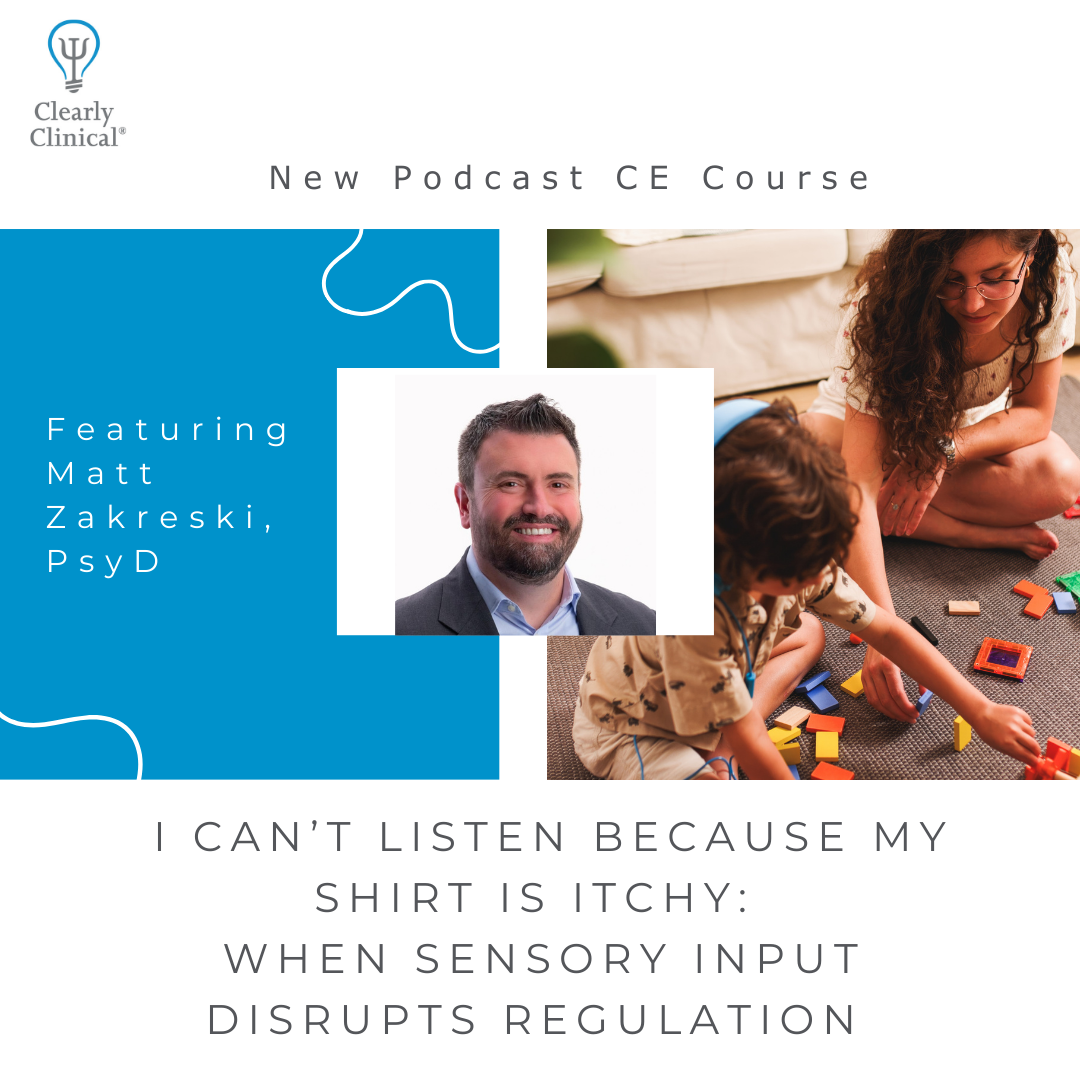
In this course, Dr. Matt Zakreski, PsyD, clinical psychologist and author of The Neurodiversity Playbook: How Neurodivergent People Can Crack the Code of Living in a Neurotypical World, examines the neuroscience of sensory processing and its implications for mental health practice.
Dr. Zakreski explains how differences in sensory processing can influence emotional regulation, behavior, attention, and anxiety. He also provides practical strategies clinicians can use to recognize sensory stress and support regulation across settings including therapy, school, home, community environments, and workplaces.
This course is designed for mental health professionals who want to better understand the relationship between sensory processing, neurodivergence, and behavioral presentation.
Why Sensory Processing Matters in Mental Health
Sensory processing refers to how the brain receives, organizes, and responds to information from the body and environment.
While many clinicians are familiar with the traditional five senses, sensory processing actually includes several additional systems that influence regulation and behavior, including:
Proprioception (body awareness)
Vestibular processing (balance and movement)
Interoception (internal body signals)
Thermoception (temperature)
Nociception (pain)
Equilibrioception (balance)
When these systems become overwhelmed or dysregulated, individuals may experience sensory overload. For neurodivergent clients in particular, this can lead to behaviors that are frequently misinterpreted as emotional or behavioral problems rather than neurological stress responses.
Understanding sensory processing helps clinicians move from behavior-focused interpretations to nervous system-informed care.
What Clinicians Will Learn in This Course
This podcast CE course helps clinicians develop a clearer framework for recognizing and supporting sensory needs in neurodivergent clients.
Key topics include:
Identifying sensory over-responsivity, under-responsivity, and low registration
Recognizing early signs of sensory stress and overload
Understanding how sensory overload connects to anxiety, dysregulation, and behavioral responses
Distinguishing meltdowns from tantrums
Designing sensory diets and environmental supports
Supporting sensory regulation across therapy, school, home, and workplace settings
The course emphasizes practical, real-world strategies clinicians can integrate immediately into their work with neurodivergent clients.
A Sensory-Informed Lens for Clinical Practice
For many neurodivergent individuals, daily environments contain constant sensory demands. Lights, noise, textures, movement, smells, and social stimuli can all contribute to cumulative sensory stress.
When clinicians recognize these factors, they can:
Reframe behaviors that previously seemed confusing or oppositional
Identify environmental triggers contributing to dysregulation
Support clients in developing effective regulation strategies
Collaborate with families, schools, and workplaces to create supportive environments
A sensory-informed approach allows clinicians to better understand the nervous system dynamics behind behavior and to intervene earlier, before overwhelm escalates.
Earn Continuing Education Credit Through Our Podcast CE Platform
This course is part of Clearly Clinical’s podcast CE library, allowing mental health professionals to earn continuing education credits while listening to engaging conversations with leading experts.
Members receive:
Unlimited podcast CE courses
Flexible, on-demand learning
Content relevant to real clinical practice
Courses approved for multiple mental health licensing boards
You can listen to the episode for free on your favorite podcast platform. If you would like CE credit for the course, it is available through our Clearly Clinical membership.
Listen to the Course
If you work with neurodivergent clients—or want to better understand how sensory processing influences behavior and regulation—this course offers a valuable new lens for your clinical work.
Learn More
I Can’t Listen Because My Shirt Is Itchy: When Sensory Input Disrupts Regulation (Ep. 263) is now available as an on-demand CE podcast course.
Listen to this episode for free on YouTube (only listeners who have an active paid membership are able to earn CE credit): I Can’t Listen Because My Shirt Is Itchy: When Sensory Input Disrupts Regulation, Ep. 263
Join our 1-year membership for $130 for unlimited podcast CE credit for a year.
Reference
Ben-Sasson, A., Hen, L., Fluss, R., Cermak, S., Engel-Yeger, B., & Gal, E. (2009).
A meta-analysis of sensory modulation symptoms in individuals with autism spectrum disorders. Journal of Autism and Developmental Disorders, 39(1), 1–11.